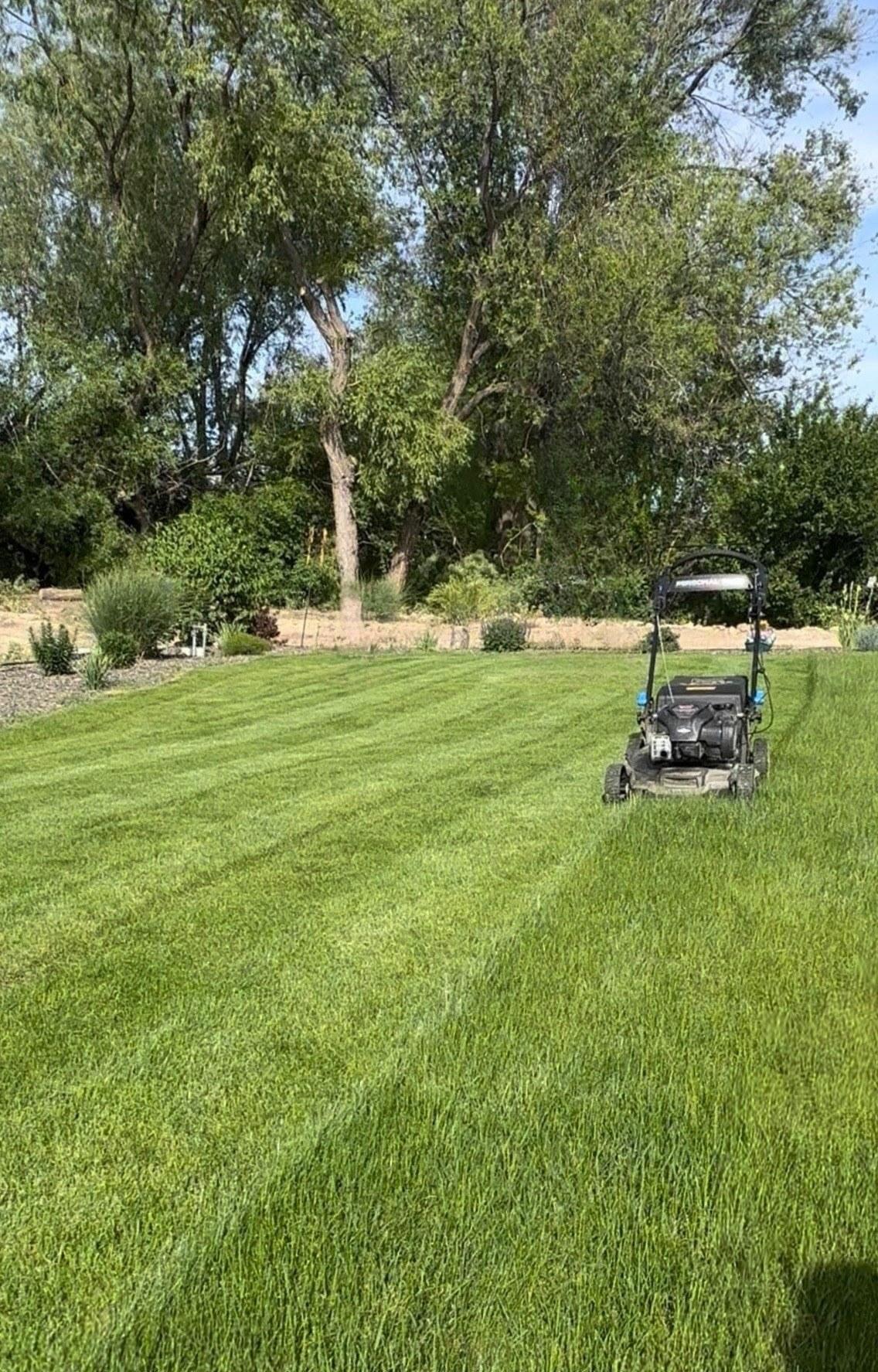
Mowing for a high-desert lawn
Most Treasure Valley lawns are cool-season blends of Kentucky bluegrass, perennial ryegrass and tall fescue. They love spring and fall here, and they struggle when July and August sit in the upper 90s. Cutting too short in summer is the quickest way to brown, stressed turf.
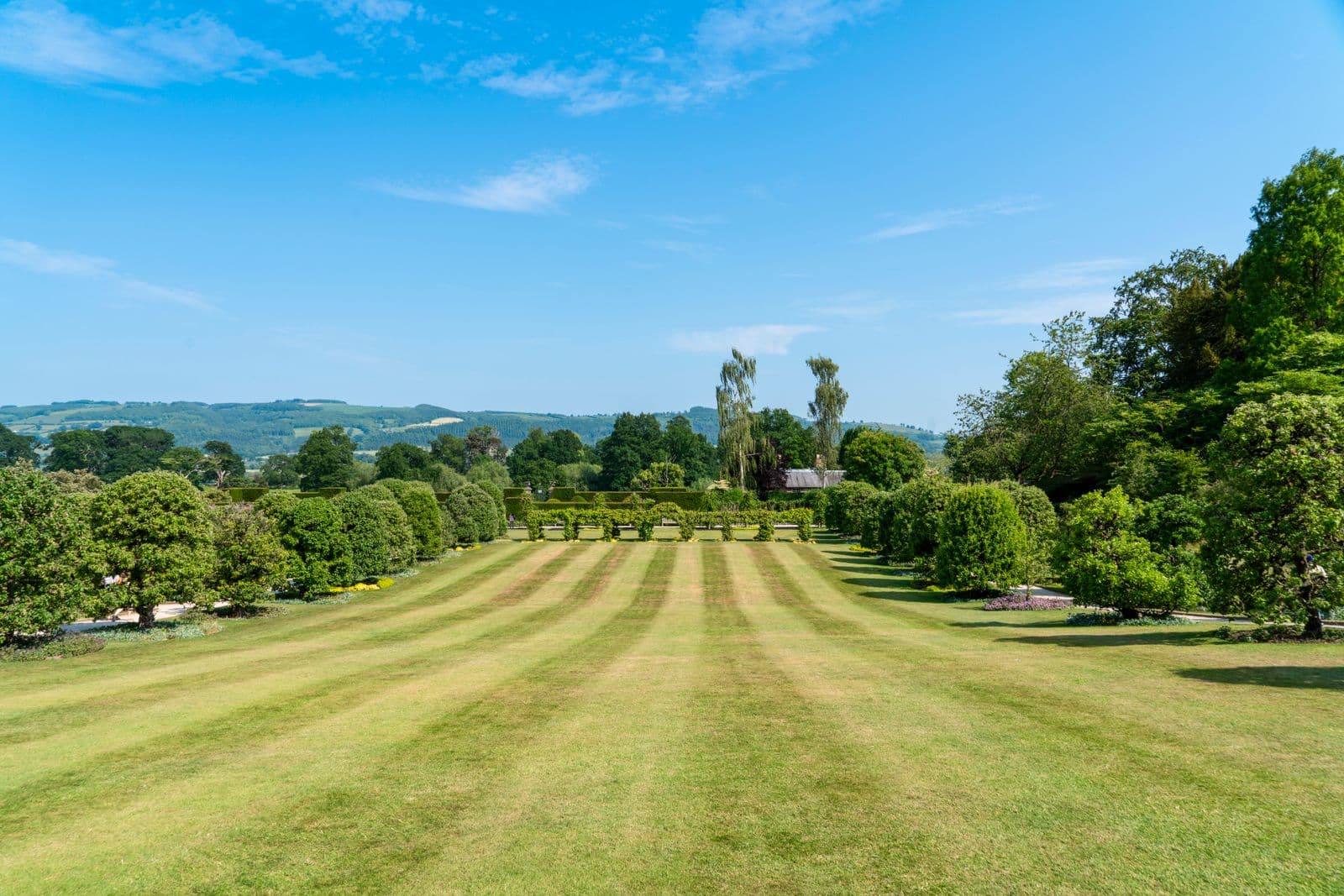
I mow a little lower in spring to help the lawn thicken up, then raise the deck to 3.5 inches or more once the heat arrives. Taller grass shades the soil, holds moisture longer between irrigation days and crowds out weeds like crabgrass and spurge.
Every visit, finished properly
Each visit includes mowing, string-trimming around fences, trees and beds, edging along sidewalks and driveways, and blowing clippings off hard surfaces. Clippings on the lawn are mulched back in, which returns nitrogen to the soil.
Pick a weekly schedule for the fastest-growing months or bi-weekly if your lawn grows slowly. I'll suggest what fits your yard.
Edging and trimming, every time
Kentucky bluegrass spreads by underground runners, so it creeps over sidewalks and into planting beds all season. Edging on every visit stops that spread before it turns into a weeding job.
Where the mower can't reach, I string-trim around fences, posts, trees, utility boxes and play sets, and take care around young tree trunks, where trimmer line can do real damage.
When I do it
Typically April through October, plus a final cut during fall cleanup.